
Nardagani Reading Method
Research, Pilot Studies & Field Results
Nardagani Reading Program Formats
The Nardagani Reading Program has been implemented in several formats over time:
Boxed Kit (Original Program) - Included printed materials, coded reading books, flash cards, and games. The boxed kit was used in early classroom and adult-education settings and in pilot programs. It was also used in homeschool settings, by tutors and teachers with learners of all ages, and in detention facilities. Individuals, including English language learners, used it independently to teach themselves.
Online Program (2019-2022) - Digital version of the Nardagani materials, delivered via web-based platform with interactive lessons, practice games, coded reading books, and downloadable printable materials. It was used in the same settings as the Boxed Kit.
App (Current) - Newly developed mobile application, delivering the same Nardagani methodology in a touchscreen, interactive format with downloadable printable materials.
Each study listed below indicates the format used in parentheses next to the school or program name.
Buhl Middle School
(Using Online Program)
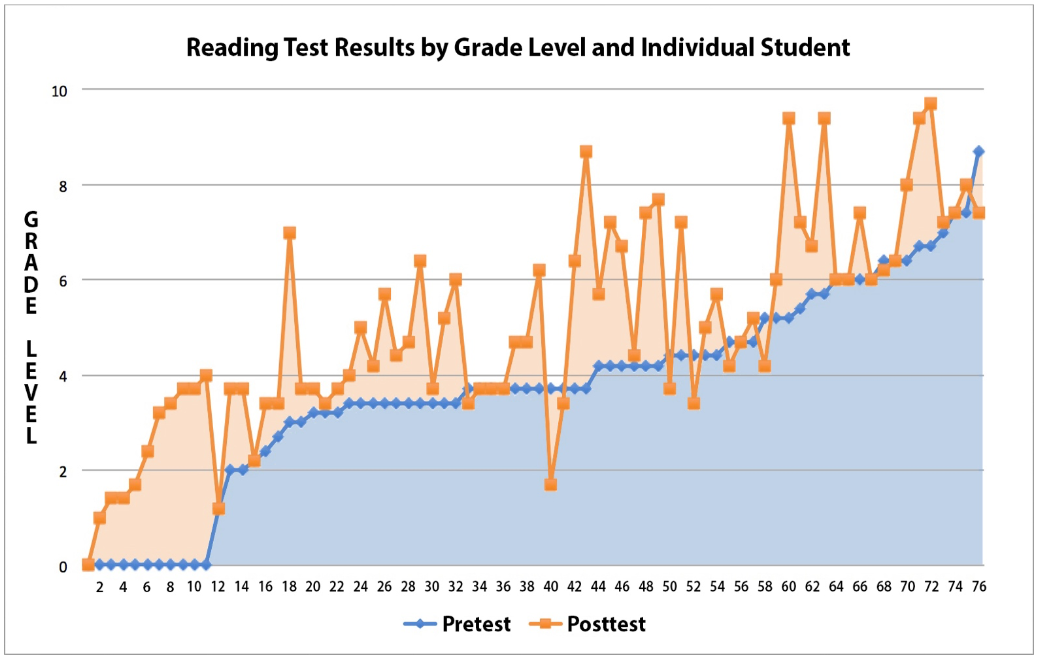
In 2020, the Buhl Middle School pilot tested the online Nardagani Reading Program with 102 students, though COVID-19 disruptions limited in-person attendance. Despite hybrid schedules, mask mandates, and safety protocols, students received full instruction in the Nardagani symbols and coded reading materials.
Of those completing both pre- and posttests, 65 students for reading and 79 for spelling showed positive outcomes. Reading median grade-level equivalents increased from 3.8 to 5.0 (1.2-grade level gain), with a mean gain of 27.1%. Spelling median scores improved 22.35%. Students who initially scored zero on reading showed the greatest growth, averaging 2.3-3.5 grade-level equivalents.
The pilot demonstrates that, even under COVID-19 restrictions, the Nardagani Reading Program can produce meaningful short-term gains in decoding, fluency, and spelling, providing a replicable model for other districts. Here is the report:
India Pilot Summary - K-2
(Using Online Program)
In 2019, a pilot study of the online Nardagani Reading Program was conducted with ten K-2 students in India who were struggling with reading and speaking English. Over a nine-week period, students progressed from relying heavily on symbols to reading confidently from Grade 1-level books without symbols. Most students showed significant improvement in pronunciation, fluency, and confidence, demonstrating the program's effectiveness in helping early learners gain foundational reading skills in English. Here is the report:
India Pilot Summary - Dr. Dada Gujar School
(Using Online Program)
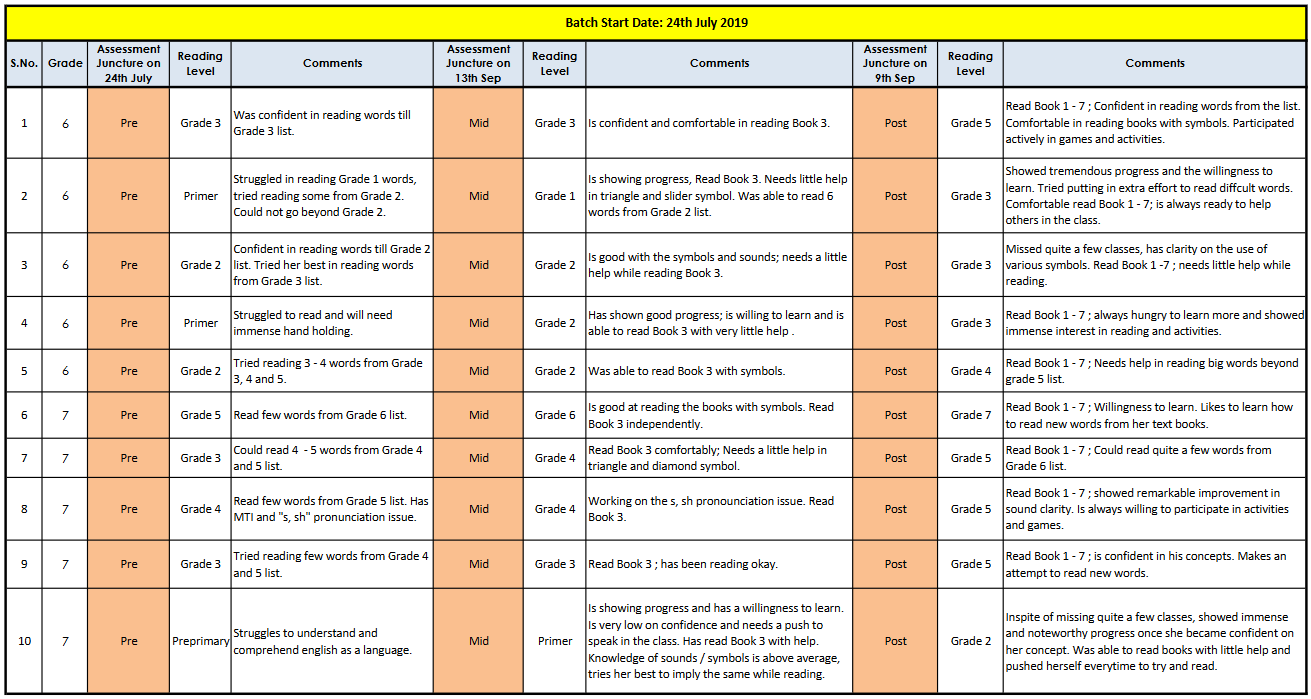
In 2019, the online Nardagani Reading Program was piloted with ten older students in India who were struggling with reading and speaking English. Over approximately six weeks, students progressed from their initial reading levels-ranging from Preprimary to Grade 5-to gains of one to two grade levels, with several students reaching Grade 5-7 by the end of the pilot. Participants demonstrated improved fluency, confidence, and symbol recognition, showing that the program can effectively support older learners with diverse reading challenges. Here is the report:
Boise State University
Qualitative Research Report by Annette Wall
(Using Boxed Kit)
This 2016 study examined the Nardagani Reading Program with two struggling middle school readers. The first student showed significant and sustained gains in decoding and fluency (from 58 to 116 WCPM), along with improved confidence and academic performance; his skills increased further after serving as a peer coach. The second student showed improved decoding accuracy and reduced guessing, though fluency gains were not yet evident. Overall, the program improved decoding, engagement, and confidence, with peer teaching reinforcing skills. Here is the report:
ANSER Public Charter School
(Using Boxed Kit)
This 2015 report examined the Nardagani Reading Program with five struggling second-grade students over two years.
In Group 1, two students who had previously received school-based reading support (e.g., small-group instruction and extra intervention time) but had not caught up to peers showed steady growth in second grade and stronger gains by the end of third grade compared to similar students who did not use Nardagani. They also maintained growth over the summer, with comprehension comparable to peers.
In Group 2, three lower-performing students made progress, though gains were more modest; two qualified for special education. Overall, despite the small sample, results suggest Nardagani may strengthen decoding, confidence, and reading growth, particularly for students without significant learning disabilities and for bilingual learners. Here is the report:
Special Education Classroom Case Study
(Using Boxed Kit)
This 2015 study examined the Nardagani Reading Program with three middle school students reading below grade level. Over eight weeks, two students made significant gains in decoding and fluency (86% and 140%, advancing two grade levels), while the third showed modest progress. Students improved at applying the symbol-based system to unfamiliar words and reported greater confidence and willingness to read. Fluency gains were maintained after the program, though students did not consistently use the symbols independently. Findings suggest Nardagani can produce substantial short-term decoding growth and boost reading confidence, but ongoing support may be needed for continued progress. Here is the report:
Snake River Correctional Institution
(Using Boxed Kit)
In 2015, six adult learners at the correctional facility used the Nardagani Reading Program. In just 7-10 days, all participants improved their reading levels by one to two grades, demonstrating the program's effectiveness for adult learners with diverse language backgrounds and learning challenges. Here is the report:
Blaine County School District
(Using Boxed Kit)
In a 2013 six-session pilot of the Nardagani Reading Program, students aged 7-15 from the Blaine County School District showed measurable improvements in reading and increased confidence reading aloud, including those with dyslexia or other learning challenges. Here is the report:
Blaine County Detention Center
(Using Boxed Kit)
In 2012, the Blaine County Detention Center offered the Nardagani Reading Program in both English and Spanish, with voluntary students attending two-hour weekly classes. Over 54 inmates participated, improving reading levels by about one grade every two weeks and increasing comprehension by 10-40% weekly. Advanced participants have trained others as instructors, and students also gain basic skills in reading and speaking a second language, averaging 20 or more new words per class. Here is the report: