
Best Places to Read: How to Create the Right Reading Space for Every Purpose
Best Places to Read: How to Create the Right Reading Space for Every Purpose
A balanced, family-friendly Nardagani guide to choosing the right reading space, staying awake when it matters, and making reading easier at home, school, work, or on the go.
At Nardagani, we know reading success isn’t just about skill; it’s also about environment. Most people choose a place to read based on comfort, but the best reading space depends on what you’re trying to accomplish. A cozy chair may be perfect for a novel, yet the same chair can make you sleepy when you’re studying or completing important paperwork. When you match your reading space to your purpose, you can improve focus, reduce mistakes, and make reading more enjoyable.
This guide offers practical reading tips for everyday life: when to read, where to read, why reading can make us sleepy, and how to create simple reading spaces that support focus without turning your home into a library or office.
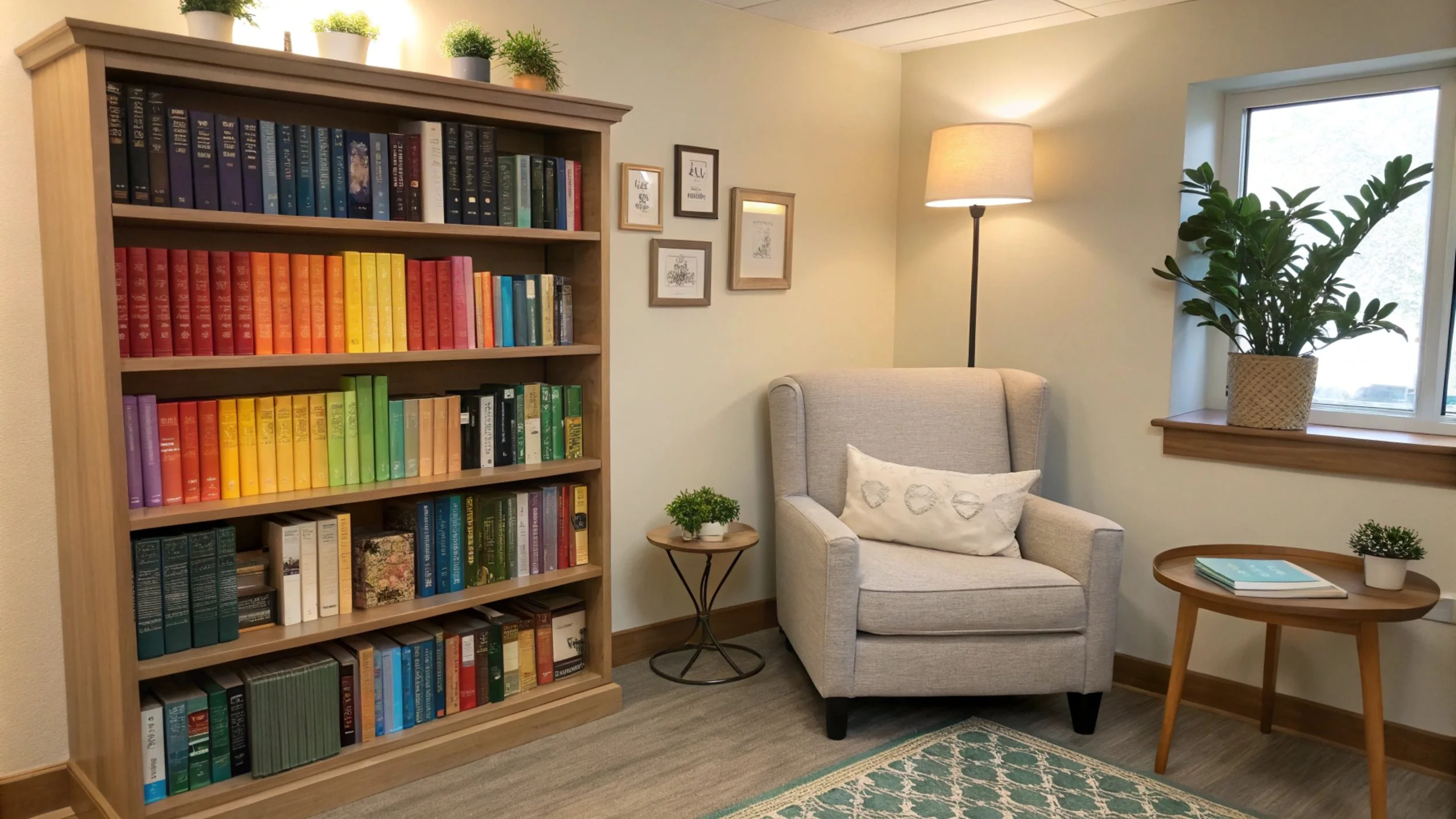
An image of a cozy reading nook with a color-organized bookshelf, a gray armchair, warm lighting, and several potted plants.
Quick Takeaways
Choose your reading space to match the task: comfort for pleasure, structure for study, and a clear desk for forms and paperwork. The best reading space isn’t the most comfortable, it’s the one that matches your purpose.
If you fall asleep while reading, the cause may be fatigue, dim lighting, poor posture, boredom, eye strain, or a strong association between reading and bedtime.
When completing forms and applications, prioritize good lighting, a flat work surface, a checklist, and a distraction-free block of time.
Create more than one reading zone at home: a cozy spot for leisure reading, a dedicated homework area, and a separate space for paperwork.
Small changes such as brighter light, upright posture, regular breaks, and less screen time before bed can make reading easier, more comfortable, and more productive.
Best Times to Read for Pleasure
Pleasure reading is most rewarding when the goal is enjoyment, imagination, relaxation, or connection. Many people like reading before bed because it can become a relaxing routine. A good book, a comfortable chair, and quiet environment can help the mind unwind from the day's activities.
Good times for pleasure reading include early mornings before the household gets busy, lunch breaks, waiting rooms, quiet evenings, weekend afternoons, and family read-aloud sessions. If you read at night, choose material that supports the mood you want to create. A gentle novel, devotional, biography, hobby book, or short story may be better for winding down than a suspenseful thriller, intense news, or a work-related document.
Best Places to Read for Pleasure
The best place to read for pleasure should be inviting, comfortable, and well lit. Choose a spot that helps you relax without being so dark or uncomfortable that it strains your eyes. A chair near a window with natural light, a shaded porch, a bed with a supportive pillow, a quiet reading nook, a library, or a family room basket of books can all make excellent reading spaces.
For children, make books both visible and easy to reach. A small basket of books beside the couch often encourages more reading than a perfectly organized bookshelf tucked away in another room.
Best Places to Read for Study
Study reading differs from pleasure reading because it requires concentration, memory, and often note-taking. For many people, an upright space such as a desk, kitchen table, classroom, or quiet office corner supports study better than a bed or recliner.
For students, the best study time is often after a short break, healthy snack, or brief walk, but not immediately after a long day when mental energy is already low. Many adults find focused sessions of 25 to 45 minutes helpful, followed by a short break. Before you begin, gather everything you need, such as a notebook, highlighter, sticky notes, water, and any digital devices or materials, so you can stay focused without any unnecessary interruptions.
Best Place to Read and Complete Forms Carefully
Forms and applications deserve their own reading environment. Whether you are completing school forms, medical paperwork, job applications, benefit applications, immigration documents, financial forms, or permission slips, accuracy is essential. Choose a flat surface, good lighting, and a time when you are not rushed or distracted.
Read the instructions completely before you begin, even if the form appears simple.
Gather all required documents before filling out the form.
Use a checklist to verify names, dates, addresses, signatures, fees, attachments, and deadlines.
Avoid completing important forms when you are tired, upset, distracted, or in a noisy environment.
Review the form twice: once for missing information and once for accuracy.
When completing an official or high-stakes form, use the current version from the official source whenever possible.
A good paperwork station does not need to be elaborate. A cleared kitchen table, a file folder, a pen, an envelope, a charger, and 30 uninterrupted minutes are often all you need. The goal is to create a workspace that minimizes distractions and reduces preventable mistakes.
Why Do I Fall Asleep When I Read?
Falling asleep while reading is common, and it does not necessarily mean the book is boring. Quiet reading often lowers stimulation compared with activities like conversation, scrolling, or television. The body becomes still, the eyes move steadily across the page, and the mind begins to relax. If you are already tired, reading may simply reveal that fatigue more quickly.
Sleep debt
Posture
Dim light
Eye strain
Routine
Low stimulation
How to Stay Awake When Reading Matters
If you are reading for study, work, or paperwork, create an environment that helps you stay alert. Sit upright in a supportive chair. Use bright, comfortable lighting and keep the room slightly cool. Read in short sections, take notes, and read aloud when it helps you stay engaged. Stand up and stretch between sections. If you are still fighting sleep, rest may help more than willpower; persistent daytime sleepiness is worth discussing with a qualified healthcare professional.
When reading on a screen, reduce glare, adjust the screen brightness to match the room, blink often, and look away regularly to give your eyes a break. When reading from paper, use a lamp that lights the page without shining directly into your eyes. Larger print, a bookmark, or a ruler placed beneath each line can help readers who lose their place or have difficulty maintaining focus.
Simple Reading Space Ideas for Home
Use layers of light: Combine daylight, a reading lamp, and room lighting.
Match comfort to the task.
Keep supplies nearby.
Manage noise thoughtfully: soft music, quiet room, or family “reading time.”
Make books easy to find.
Protect your sleep: avoid stressful paperwork and demanding study.
Today's Challenge:
Pick one place in your home and turn it into a dedicated reading space. Whether it's a chair by the window, part of the kitchen table, or a small basket beside the couch, you'll be surprised how much easier reading becomes when your environment supports your goal. Small environmental changes often lead to better reading gains.
Follow the link for a free PDF checklist: Build Your Own Reading Space.
At Nardagani, we believe that simple, practical reading habits can make a meaningful difference. A thoughtfully prepared reading space doesn’t have to be perfect; it simply needs to fit the way real people and real families live, learn, and grow. With the right reading space, every reader, child or adult, may feel more confident, more focused, and more supported.
Sources:
• American Academy of Ophthalmology. Guidance on digital eye strain, blinking, screen brightness, glare, and screen use before bedtime.
• American Optometric Association. Digital eye strain guidance, including the 20-20-20 rule.
• Centers for Disease Control and Prevention (CDC)/National Institute for Occupational Safety and Health (NIOSH). Guidance on healthy sleep habits and limiting light exposure before bedtime.
• National Sleep Foundation. Sleep health guidance on bedtime routines, lighting, and the sleep environment.
• Sleep Foundation. "Reading Before Bed." Updated July 24, 2025.
• U.S. Citizenship and Immigration Services (USCIS). Guidance and tips for completing immigration forms accurately.
Start your journey today and see how Nardagani symbols can make learning to read easier, faster, and more enjoyable for learners of all ages.
TEDx Talk by Founder: Watch Here
Website: https://www.nardagani.com
iOS Link: App Store
Google Play Link: Play Store
Promotional Video: Why Is English So Hard?